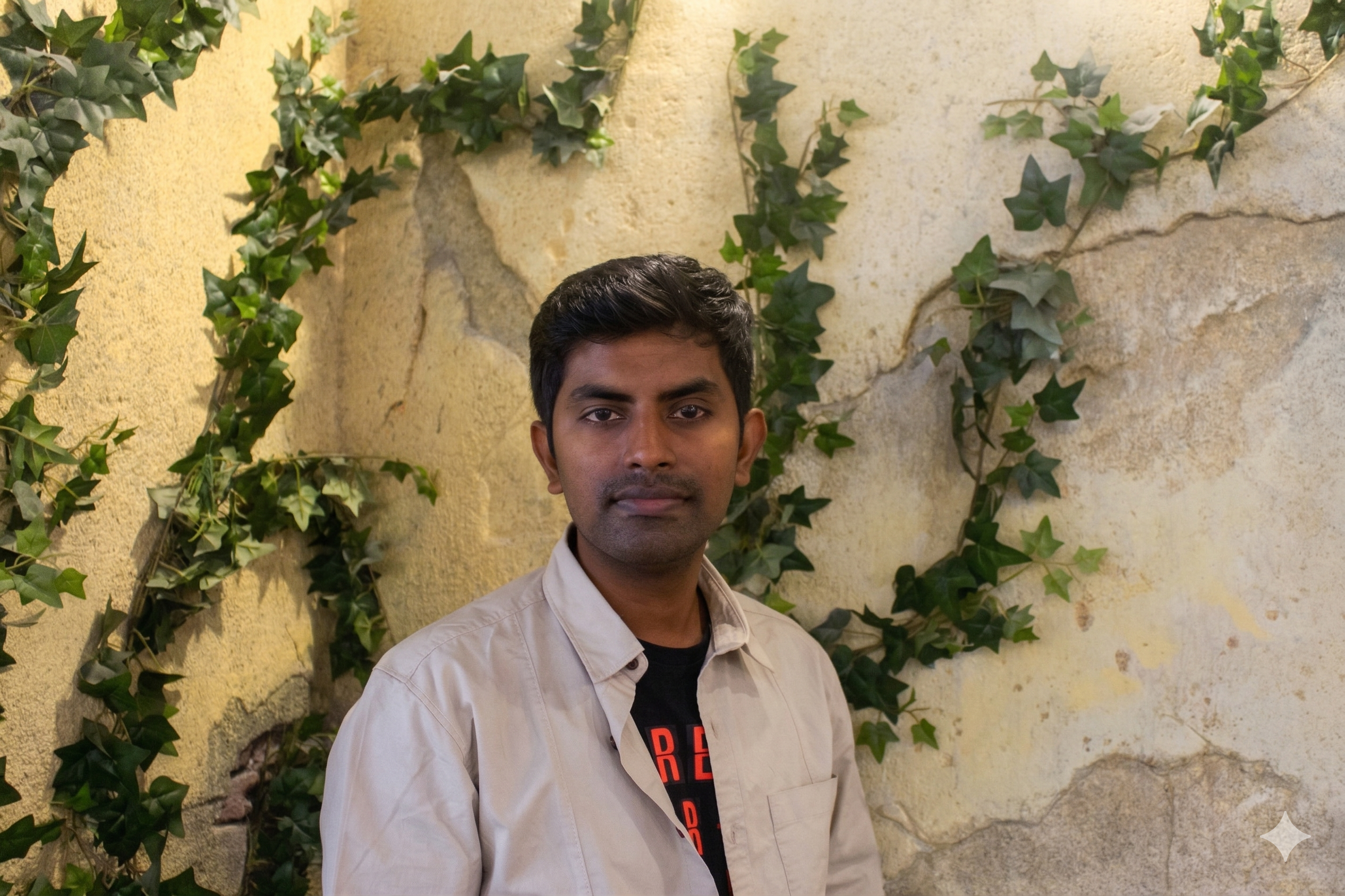
Senior Product Manager with 10+ years building AI-powered B2B SaaS. My career started with raw ML pipelines and annotation failures — long before "AI" became a pitch deck buzzword.
Most people working in "AI products" today learned the field through APIs and prompt playgrounds. I learned it by breaking models in production.
In 2015, I was writing NLP rules by hand to extract entities from unstructured job postings — no transformers, no embeddings, just regex, domain logic, and painful edge cases. I watched statistical models drift. I debugged Elasticsearch ranking failures that looked like "AI problems" but were really data pipeline problems.
By 2019, I was leading teams building computer vision systems for PCB defect detection and digital twins for factory floor management — long before anyone called it "agentic AI." Designing human-in-the-loop workflows, handling model uncertainty in production, deciding when the system is wrong — all of that predates ChatGPT by years.
That depth — knowing where AI systems fail, how to instrument them, how to build trust with users who've been burned before — is what I bring to every agentic AI product today.
Selected work spanning manufacturing AI, healthcare NLP, and enterprise GTM intelligence — built end-to-end across strategy, engineering, and go-to-market.
Org-wide AI initiative using predictive ML to help enterprise sales teams identify and prioritize high-value accounts. Redesigned explainability, model feedback loops, and onboarding to drive real adoption.
Architected agentic AI systems that autonomously analyze account behavior, identify high-propensity segments, and generate outreach recommendations — with explicit human-in-the-loop override design at every decision boundary.
NLP product enabling contextual data extraction from unstructured clinical documents. Built confidence-threshold escalation to human review — designed for zero-tolerance compliance environments.
Digital twin platform for PCB manufacturing with real-time computer vision defect detection and predictive failure mitigation. Led 25+ member cross-functional team from zero to production.
Natural language-to-SQL agentic system enabling non-technical GTM teams to query Snowflake warehouses in plain English — eliminating the analyst bottleneck for routine data questions.
Data warehouse toolkit analyzing SIP signaling flows to detect call failures in real time. Built Elasticsearch indexing pipeline that reduced issue resolution from 24 hours to 30 seconds.
A decade of building AI products before it was fashionable — failing fast, shipping hard, and learning the things you can't learn from a prompt playground.
ZoomInfo had the data. It had the model. What it didn't have was adoption. Account Fit Score was at 30% when I joined — not because the model was wrong, but because the product experience was broken. Sales teams ignored it, routed around it, or used it wrong. I spent the first quarter talking to the people who weren't using it. The blockers were implementation complexity, opaque scoring logic, and a mismatch between model optimization and what reps needed to close deals.
I redesigned the explainability layer so reps could see why an account scored the way it did. I simplified onboarding. I built CRM feedback loops connecting win rates back into model refinement cycles. Twelve months later: 60% adoption. The product hadn't changed. The trust had.
From there I moved into agentic territory — LLM + RAG systems that autonomously segment accounts, generate outreach recommendations, and hand off to reps with full context. The key design challenge in agentic products isn't the automation. It's the handoff. I built explicit human-in-the-loop override workflows into every agent surface.
Moving into healthcare, I faced a domain where AI failure has the highest human cost. My mandate: build a document intelligence product that extracted structured data from unstructured clinical notes with HIPAA compliance built in from day one.
The hardest product decision wasn't the NLP architecture. It was defining what the system should refuse to do. I designed confidence thresholds below which Dexter escalated to human review rather than committing an extraction. I built audit trails into the core data model. We won 6 RFPs because our proposals showed we understood where the AI would fail — and had systematic plans for it.
This is where I learned what production AI really means. We built digital twin systems for PCB manufacturing — real-time computer vision pipelines that detected defects before they compounded and predicted equipment failures before they halted production. Leading a 25+ member team, I operated at every altitude simultaneously.
Clients saved over $1M annually — not because our model had the highest benchmark scores, but because we designed workflows around the model's uncertainty. Every critical decision had a human escalation path. That philosophy now applies to LLM outputs rather than CV model outputs — but the principle hasn't changed.
Before moving into product, I was the bridge between data science and engineering. I built annotation tooling, designed ML deployment pipelines, and watched models fail in ways no benchmark had predicted. This is where I learned what happens when a PRD is underspecified — and it permanently changed how I write them.
I was promoted directly from this role to Product Manager — an unusual path that gave me engineering credibility most PMs don't have when walking into ML design reviews.
BroadSoft powered UCaaS infrastructure for enterprise customers. Diagnosing failures meant parsing thousands of SIP signaling logs by hand. I built a diagnostic intelligence toolkit that indexed SIP log streams into Elasticsearch in real time, detected anomaly patterns, and surfaced root causes automatically. This was my first lesson in what data products do for operations teams — transforming reactive firefighting into proactive intelligence.
Burning Glass parsed millions of resumes and job postings to extract labour market insights. I wrote NLP extraction rules, managed Elasticsearch clusters, and improved a statistical model's accuracy from 95% to 98% through methodical rule engineering. This taught me that AI product work is 80% data quality and 20% model architecture — a belief I've carried ever since.
Technical depth from a decade of hands-on AI engineering, paired with the product strategy to translate it into products people actually adopt.
Published thinking on AI product work — frameworks, field notes, and community sessions.
AI product failures don't happen because "the model isn't smart enough" — they happen because teams miss critical pieces. A bird's-eye framework covering all 10 layers: foundations, models, data, retrieval, training, agents, inference, evaluation, safety, and applications.
Co-authored and presented two papers: BUDDI Table Factory (synthetic document generation with annotated tables) and a robust section identification method for scanned electronic health records.
2-day workshop on AI, Agentic AI & Digital Twins for 25 surveyors from 8 states at Survey of India's Eastern Zone Office — held in the building where India's first Constitution was printed.
Delivered a session at the premier State Administrative Training Institute of Tamil Nadu — covering GenAI applications in public services, from automating administrative processes to improving citizen engagement.
Evaluated 8 teams of newly recruited Deputy Collectors, DSPs, ACCTs & Deputy Registrars presenting AI-powered approaches to mental health, climate change, tourism, and data science in governance.
Live session and demo at AI Chennai Meetup hosted at ZoomInfo, covering architecture for semantic video search using Elasticsearch — practical ML + search engineering for a community audience.
Ten years of building the hard way produces capabilities that can't be learned in a sprint workshop or a prompt engineering course.
A decade of building, recognised by peers, leadership, and the patent office.
Open to Senior PM and Principal PM roles in AI-native B2B SaaS — especially products where the AI needs to be trusted, not just impressive. Based in Chennai. Open to remote and hybrid.